Services
Sample types
For further details, please refer to the project request documentation. If you are unsure which category best fits your samples, please contact Marie Vestergaard Lukassen for guidance.
Below is an overview of the ten sample categories accepted by the Core. For each category, you will also find the corresponding Sample Submission Form (SSF) in .xlsx format, which outlines the required metadata and information needed for submission. If you experience any issues accessing the SSF or have general questions, please contact Vasileios Tsiamis.

- Gel bands: Excised bands or spots from 1D or 2D gels, suitable for identifying specific proteins resolved by electrophoresis. (SSF_Gel.xlsx)
- Purified or fractionated: Proteins that have been purified or pre-fractionated prior to submission, typically high-purity samples obtained from chromatographic separations. (SSF_Purified.xlsx)
- Pull-down(IP): Samples from co-immunoprecipitation (co-IP), affinity purification, or other pull-down assays targeting protein interaction partners. (SSF_Pulldown.xlsx)
- Secretomes: Conditioned media or other fractions enriched in secreted proteins, requiring careful consideration of serum-derived background. (SSF_Secretomes.xlsx)
- Cells (pellet or lysates): Whole-cell lysates or cell pellets from cultured cells. Very common sample type for Global proteomics. (SSF_Cells.xlsx)
- Tissue (plant or animal-derived): Fresh, frozen, or FFPE tissue samples. Requires homogenization and lysis steps adapted to tissue type and preservation method. (SSF_Tissue.xlsx)
- Tissue slides (spatial): Thin tissue sections on slides preserving spatial organization, used for spatial proteomics. (SSF_Spatial.xlsx)
- Biofluids: Plasma, serum, urine, mucus, cerebrospinal fluid, and other complex biological fluids. (SSF_Biofluids.xlsx)
- Biomass: Environmental or clinical samples including feces, swabs, sediment, and similar materials. Often used for metaproteomics. (SSF_Biomass.xlsx)
- Peptides ready to inject: Peptide mixtures prepared externally that can be submitted directly for MS analysis. (SSF_Peptides.xlsx)
Sample preparation services
We convert your biological material into a peptide mixture optimized for LC–MS/MS analysis. The sample preparation method you select has a direct impact on which proteins can be identified and accurately quantified. We recommend consulting our project request documentation for guidance on choosing the most appropriate workflow. Below is an overview of the available sample preparation services.
If you are uncertain, please contact Marie Vestergaard Lukassen for assistance.
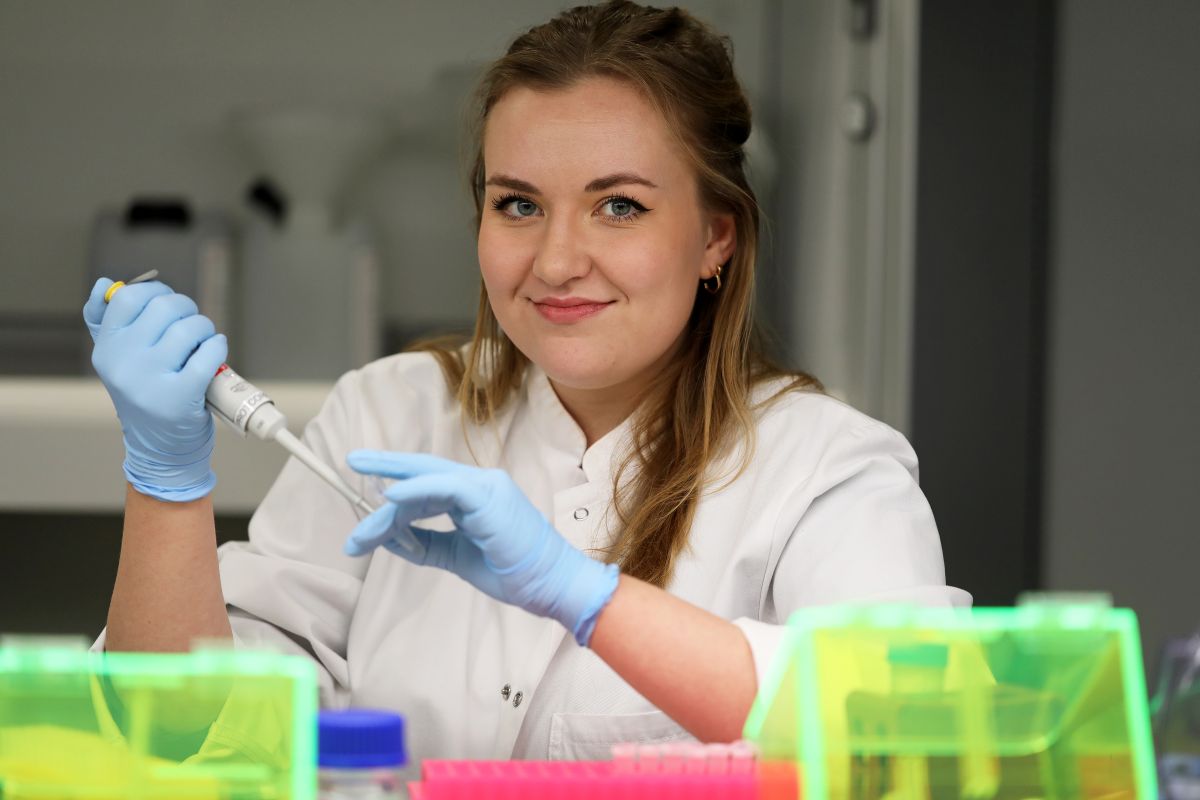
- Standard bottom-up (Trypsin): Proteins are denatured, reduced, alkylated, and digested with trypsin to generate peptides in the 700–2,500 Da range. Ideal for the vast majority of proteomics experiments including Global proteomics profiling, Phospho-proteomics, and most PTM studies.
- Alternative protease digestion: When trypsin is not optimal, we offer Lys-C, Glu-C, Asp-N, Chymotrypsin, and other enzymes to improve sequence coverage or enable multi-enzyme experiments.
- No digestion (Peptidomics): For samples already consisting of endogenous peptides (neuropeptides, hormones, antimicrobial peptides, MHC-presented peptides). The sample is injected directly onto the LC-MS system without enzymatic digestion.
- Special handling: Custom preparation steps such as specific lysis conditions, detergent removal, depletion of high-abundance proteins, or up-concentration by precipitation. Describe requirements at project submission.
Mass spectrometry analysis
We offer a range of mass spectrometry–based proteomics services tailored to different sample types and experimental goals. Each method is optimized to ensure reliable protein identification and quantification. Multiple MS methods can be combined within a single project when appropriate. Below is an overview of the available MS-based services.
If you are unsure which service best fits your study, please contact us before submitting, and refer to the project request documentation for guidance.
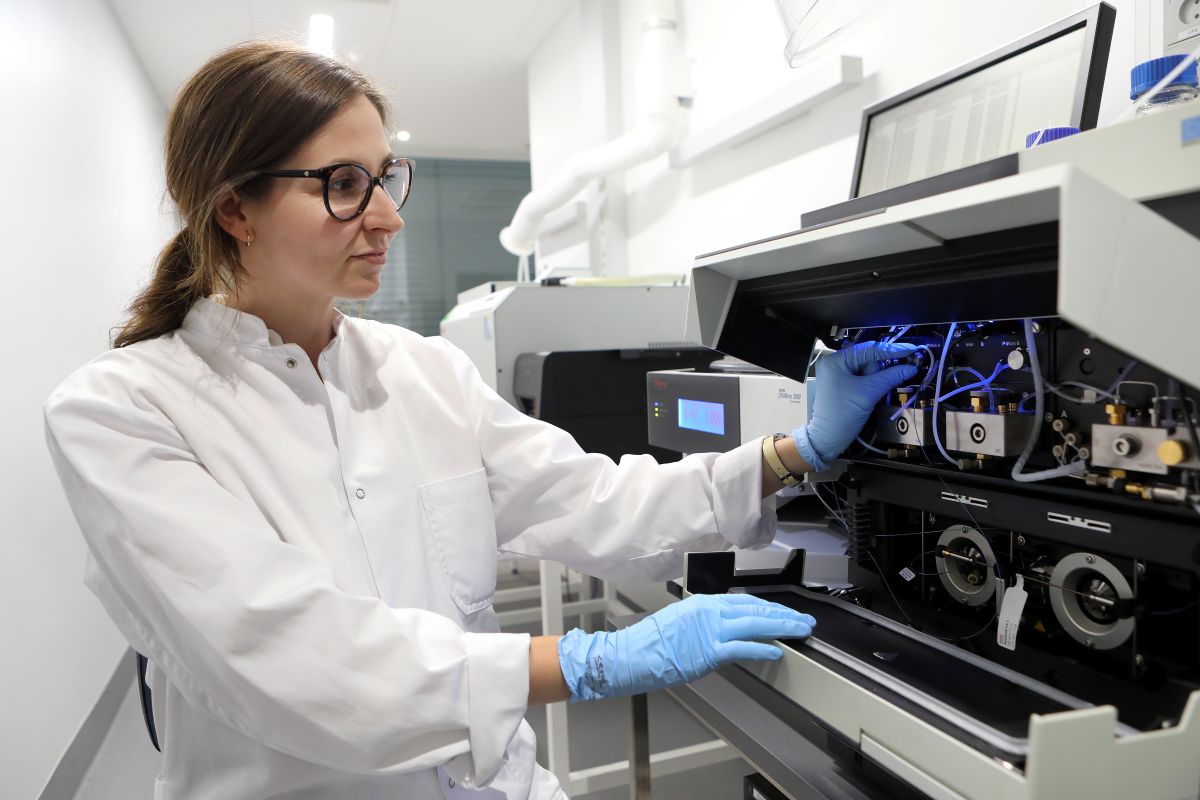
- Global Proteomics (DDA): Data-Dependent Acquisition (DDA) for discovery-driven proteome profiling. The instrument performs a full MS1 survey scan and dynamically selects the most intense precursor ions for fragmentation. Well-suited for moderate sample numbers and lower-complexity samples, peptidomics, non-standard PTMs, and de novo sequencing in metaproteomics. Data are processed with Proteome Discoverer™ for peptide/protein identification and label-free quantification (LFQ).
- Global Proteomics (DIA): Data-Independent Acquisition (DIA) for comprehensive, quantitatively consistent proteome profiling. All precursors within predefined m/z windows are systematically fragmented each cycle, reducing missing values across large cohorts. Best for larger sample sets, longitudinal studies, and clinical projects where reproducibility is critical. Data are processed with Spectronaut™.
- Global Proteomics (TMTpro™ 18-plex): Isobaric labeling enabling multiplexed quantification of up to 18 samples in a single LC-MS run. After labeling, samples are combined, fractionated offline, and analyzed together. Minimizes run-to-run variability and is particularly powerful when all samples fit within one pool. For larger study designs requiring multiple pools, reference (bridge) channels are included to normalize batch effects. Contact us before selecting this option to ensure optimal experimental design.
- Phospho-Proteomics (Enrichment): Phosphopeptide enrichment using TiO₂ or IMAC, followed by MS analysis. Suitable for kinase signaling studies, drug response experiments, or system-wide phosphorylation profiling. Requires higher protein input (~500 µg per sample). Can be combined with Global DDA or DIA from the same digest to simultaneously measure the proteome and phosphoproteome.
- Other PTM Proteomics Analysis: We currently do not offer in-house enrichment for PTMs other than phosphorylation (e.g., ubiquitination, SUMOylation, acetylation, glycosylation, methylation). Pre-enriched samples are accepted, and selected PTMs can be included at the data-analysis level without prior enrichment when specified at submission using standardized Unimod nomenclature (e.g., "Acetyl (K)", "GlyGly (K)").
- Targeted Proteomics (PRM): Parallel Reaction Monitoring (PRM) for precise, hypothesis-driven quantification of a predefined set of target proteins or peptides. The instrument monitors only the specific precursors corresponding to your targets, enabling highly sensitive and reproducible quantification even at low abundance. A validated peptide target list with precursor m/z values must be provided before analysis. Heavy-labeled peptides can optionally be included for absolute quantification. Contact us before selecting this option.
Data analysis
For further details, please refer to the project request documentation. If you are unsure which data analysis option best suits your project, please contact Marie Vestergaard Lukassen or Vasileios Tsiamis for guidance.
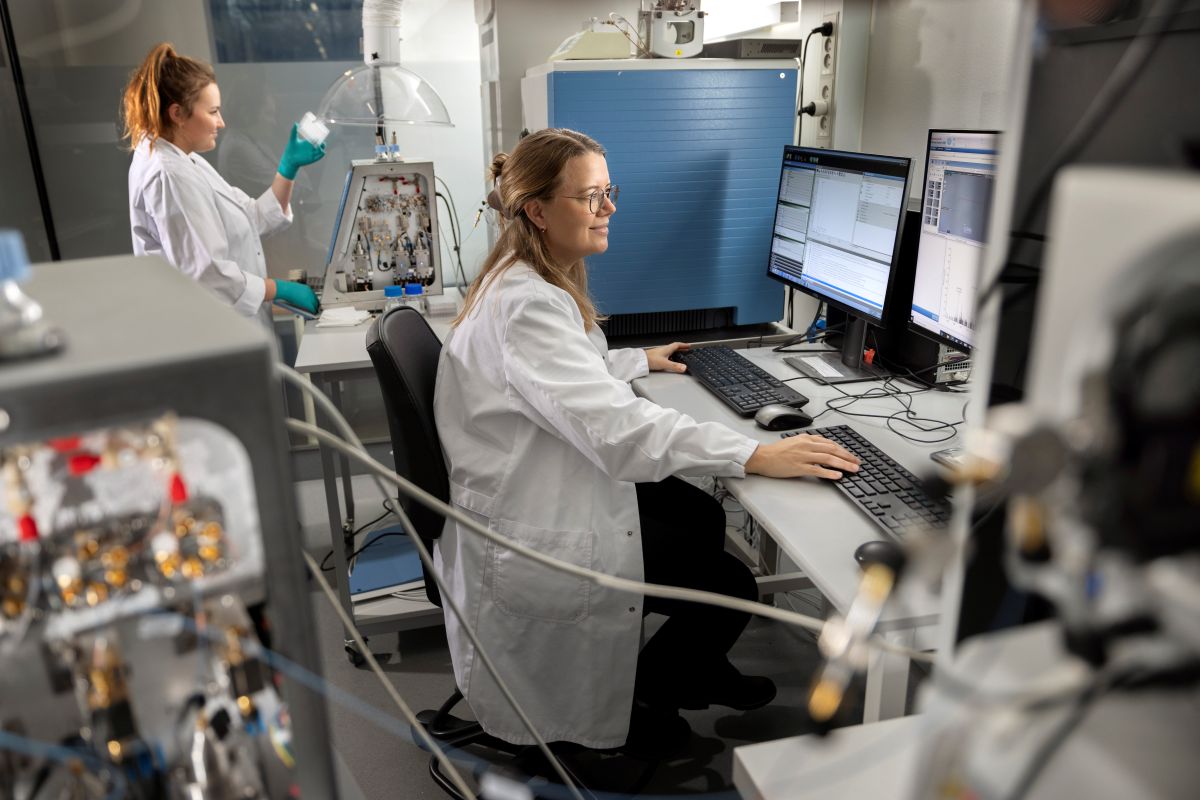
- Raw MS Files (.raw): Unprocessed Thermo Scientific instrument files containing all MS1 and MS2 spectra. Provided by default. Required if you intend to analyze data in Spectronaut™, MaxQuant, DIA-NN, Skyline, or similar. Estimate size ~1–5 GB per file.
- Identification and quantification report: Processed results table delivered as a spreadsheet or equivalent format (.tsv, .csv, or .xlsx), containing protein and peptide identifications, intensities, and associated quality metrics. We use Spectronaut™ for DIA and Proteome Discoverer™ for DDA, respectively. Recommended for users proceeding to downstream analysis.
- Downstream analysis report: Fully interpreted report including data normalization, differential expression analysis, and visualizations (e.g., volcano plots, PCA plots, heatmaps, GO & pathway enrichment). Suitable for labs without in-house bioinformatics capacity. Available for all services except Targeted proteomics (PRM).
- Custom request: Multi-omics integration, alternative search engines, targeted analysis, specialized normalization, journal-specific output formats, or any non-standard analysis. Describe requirements during project request submission. Contact us before submitting to confirm feasibility.